About Us
Baby & Adult Diaper Manufacturing Solutions

A Manufacturer You Can Grow With
Litewave Healthcare is a diaper manufacturer based in India, and we make one thing our priority: comfort that holds up all day. We produce baby and adult diapers for families, caregivers, and businesses that need products they can depend on. Beyond our own line, we work with brands that want to launch their own hygiene products but don't have the manufacturing setup for it - that's where our OEM diaper manufacturer in India services come in. Whether it's a soft, breathable diaper for a newborn or a higher-absorbency option for adult care, we keep the same standard across every batch we produce. If you're a business looking to build a diaper brand from the ground up, our team and facility are set up to help you do that without cutting corners.
Litewave healthcare private limited *
Litewave healthcare private limited *
Litewave healthcare private limited *
Litewave healthcare private limited *
Litewave healthcare private limited *
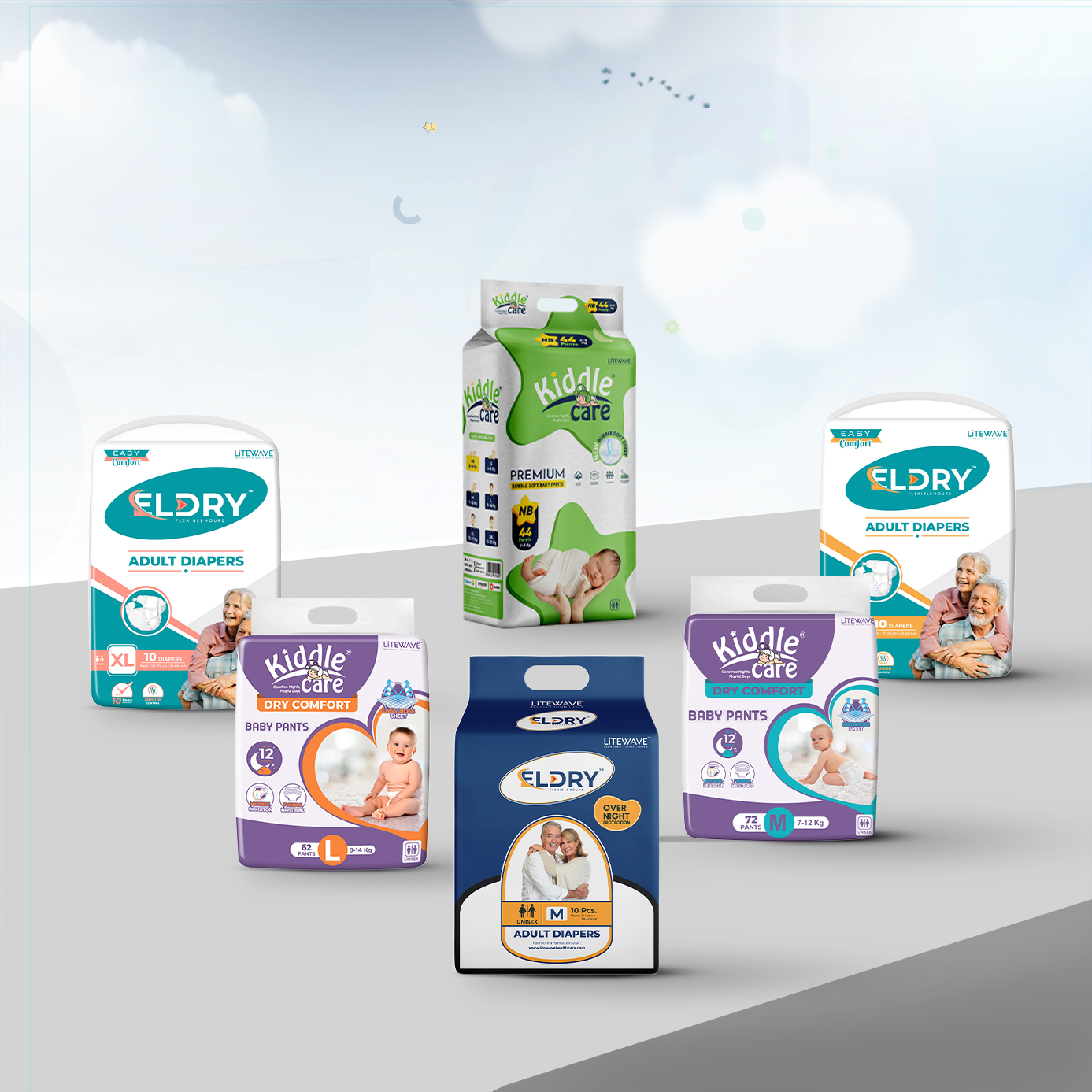
our brands
Brands Made for Everyday Care

Kiddle Care - Baby Diapers
As one of the trusted baby diapers manufacturers in India, Kiddle Care is made with a baby's sensitive skin in mind — soft against the body, absorbent where it counts, and dependable enough that parents don't have to think twice.

Eldry - Adult Diapers
As an experienced adult diaper manufacturer in India, Eldry is built for adults who want protection that doesn't get in the way of their day. Discreet, secure, and comfortable enough to wear without a second thought.
Why Choose Litewave
Committed to Quality and Care

Quality-Focused Manufacturing

Responsible Manufacturing

Customer-Focused Approach

Reliable Manufacturing Partner
Advanced Diaper Manufacturing Unit in India - Litewave Healthcare
Step onto our production floor and you'll see what actually goes into a diaper before it ever reaches a store shelf. We've invested in equipment that runs fast without cutting corners, and we've paired it with people who know this process inside out. Speed matters to us, sure, but not at the cost of getting it wrong. Every batch has to meet the same bar, whether it's the first run of the day or the last.
Key Highlights:
Advanced Production Capacity: Our lines are automated to handle high volume, but that never comes at the expense of getting each piece right Precision Machinery & Process : We work with ultra-soft materials and machinery built to stop core leakage before it starts. Baby & Adult Care Specialization: Babies and adults don't need the same kind of protection, so we don't try to force one line to handle both. Newborn skin needs a gentler touch, while adult care calls for stronger absorbency - that's why each gets its own dedicated production line. Strict Quality Control: Nothing gets cleared until it's passed through several rounds of checks for hygiene and safety. Eco-Conscious Manufacturing : As we grow, we're keeping an eye on our environmental footprint, not ignoring it.


OEM & Private Label Services
Custom Diaper Manufacturing & OEM Solutions
Want to build your own hygiene brand without setting up a factory? That's exactly what our OEM and private label service is for. Litewave Healthcare Private Limited handles the manufacturing end-to-end, so you can focus on growing your brand while we take care of production, quality, and packaging.
Key Capabilities:
Customized Product Options: Choose your absorbency level, backsheet material, leak guard type, waistband style, and sizing - for baby diapers, adult diapers, or both. Scalable Production Capacity: Whether you need a small test batch or a large bulk order, our high-speed setup is built to keep pace with your timeline. Complete Branding & Packaging: From packaging design to private labeling, we support the full branding process so your product looks and feels like your own from day one. Uncompromised Quality Assurance: Every OEM order follows ISO, GMP, and CE protocols - no shortcuts, no exceptions.
Trust & Compliance
Certified for Global Quality & Hygiene Standards
Quality isn't something we claim - it's something our certifications back up. Our facility holds ISO, BIS, GMP, and CE marking, which means every product that leaves our line has been made under recognized international standards. When you partner with Litewave Healthcare, you're working with a manufacturer that has the paperwork and the track record to prove it.


Quality Assurance & R&D
Advanced In-House Quality & Testing Department
We don't send a product out until it's earned the right to leave our facility. Our in-house testing lab runs every batch of baby and adult diapers through physical, chemical, and microbiological checks before it ever reaches a shelf.
Key Testing Capabilities:
Absorbency & Retention Testing: We check how fast liquid absorbs, how much the core can hold, and how well it resists re-wetting - because dryness that doesn't last isn't good enough. Material Tensile & Elasticity Checks: Side tapes, waistbands, and leg cuffs get tested for strength and stretch, so the fit stays secure and doesn't tear where it shouldn't. Skin-Safety & Dermatological Compliance: Every top sheet and raw material is checked to be hypoallergenic, pH-balanced, and free of anything harsh or harmful. Microbiological & Hygiene Standards: Routine bio-burden testing and sanitized handling throughout, so our hygiene standards hold up to global health guidelines - not just local ones.
Quick Trust / Company Stats
Manufacturing Capability You Can Rely On

2 Million per day Production Capacity

20+ OEM Partnerships

2022 - Established

India - Manufacturing Facility
FAQs
What types of diapers does Litewave Healthcare manufacture?
We manufacture both baby diapers and adult diapers, each designed around comfort, absorbency, and everyday reliability.
Do you provide OEM diaper manufacturing?
Yes. We handle the full OEM process – from product development through to packaging – built around what your brand needs.
Can I manufacture diapers under my own brand?
Yes, that’s exactly what our private label service is for. You bring the brand, we bring the manufacturing.
What products can be customized?
Absorbency levels, backsheet materials, leak guards, waistband design, sizing, and packaging can all be customized.
What is the minimum order quantity?
It varies by requirement – we handle both small trial runs and large bulk orders, so it’s best to discuss your specific needs with our team.
Does Litewave manufacture both baby and adult diapers?
Yes, we run dedicated production lines for each, so both categories get the attention they need.
Can you support bulk diaper orders?
Yes, our facility is built for high-speed, large-scale production without compromising on quality.
Where is your manufacturing facility located?
Our facility is located in India, equipped with modern machinery and strict quality checks throughout.
How can I request an OEM quotation?
Reach out through our inquiry form or contact page, and our team will walk you through the quotation process.
Do you provide customised packaging?
Yes – custom packaging and private label branding are both part of our OEM offering.
Blogs
28, Nov 2026
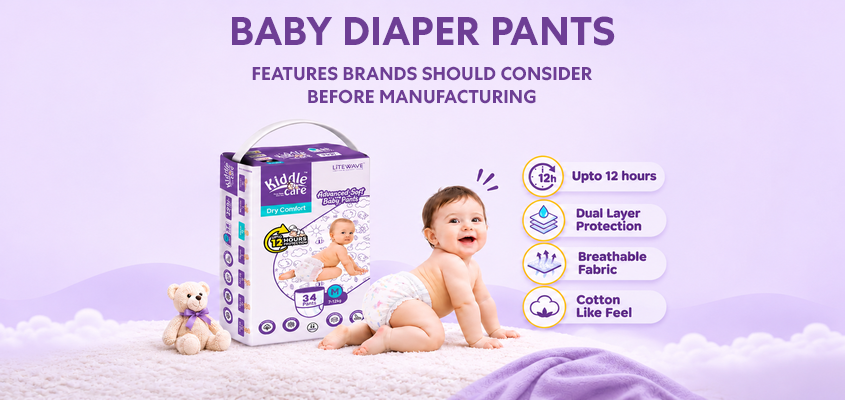
Baby Diaper Pants: Features Brands Should Consider Before Manufacturing
What Makes a Baby Diaper Pant Comfortable, Reliable & Parent-Friendly?
Ask a few young parents what they want from a diaper, and you'll hear the same short list. Quick to pull on, even when the baby won't keep still. No leaks at night. No red marks on the skin. That's a big reason baby diaper pants have become so popular in India and elsewhere. You pull them up like underwear, and there are no tapes to fight with. For a brand, though, pants are less forgiving than they look. Parents notice every small thing: how the waistband feels, whether the legs leak, whether the pack in month three matches the pack in month one. So product quality and design matter from the very first sample. The materials, the absorbency, the fit, and the manufacturing partner all need to be right, and careful planning before you place an order is how you meet what parents expect instead of finding out through bad reviews.1. Soft and Skin-Friendly Materials
Start with the material. It touches the baby for hours, and baby skin is thin and gets irritated easily. The inner layer should feel soft, and it should pull liquid through fast so the skin doesn't stay wet. Airflow matters too. A diaper that traps heat is awful in a hot Indian summer. The outer layer has to stretch when the baby moves, not crinkle and bunch. Be a little sceptical of whatever a supplier tells you. Ask for the material details in writing, plus any skin testing they've done. "Gentle" printed on a brochure proves nothing.2. High Absorbency and Moisture Locking
Parents don't say "absorbency". They say "it leaked" or "it didn't". The core does most of the work. Usually that's fluff pulp mixed with super-absorbent polymer, and the mix changes how quickly liquid goes in and how well it stays there. So ask three things: how fast does it absorb, how much can it hold, and does the top still feel dry afterwards? That last one matters. A wet top layer is often what wakes a baby up. Think about when it will be worn, too. For daytime, a slimmer diaper is fine. At night you need a bigger core that spreads the liquid out instead of letting it sit in one place. Some brands sell a normal pack and a night pack for that reason.3. Leak Protection and Secure Fit
Most leaks don't happen in the middle of the diaper. They happen at the legs and the waist, usually when the baby is moving. Start with the leg openings. Leak guards, the little raised barriers, and elastic leg cuffs keep liquid in when a baby crawls, kicks or sits. Then the waist. If it gapes at the back, liquid will find a way out, so ask how the waist is built. The fit around the thighs should be snug without leaving marks. Think about active babies too. A diaper that works on a sleeping newborn can fail on a crawling nine-month-old. Ask to see how a sample behaves when the baby is moving around, not just lying still.4. Stretchable Waistband and Easy-to-Wear Design
Pants win over tapes because they're quick. A parent holding a squirmy toddler with one hand doesn't want to line up tapes, so the construction has to make life easier. A stretchable waistband should hug the waist, give a little when the baby moves, and not dig in. Flexible sides help the diaper adapt to different body shapes. Try the pull-up yourself. It should go on and come off without a fight, and it shouldn't feel tight enough to leave a mark. Tearable side seams are worth asking about. They let a parent open the diaper at the side for removal, which is a real relief when it's soiled. Check that the seam opens cleanly, and that it doesn't tear while you're pulling the diaper up.5. Different Sizes for Different Growth Stages
Babies outgrow things fast, so your size range has to follow how they grow. Plan it by weight rather than only age, since babies of the same age can be very different in size. Newborns and young infants need a softer, smaller fit. Beyond that, brands usually offer small, medium, large and extra-large, depending on the range. Check how each size is defined and whether the weight bands overlap sensibly. Fit should also feel consistent from one size to the next, so a parent moving up doesn't feel like they've switched brands. Absorbency and design shouldn't be copied across sizes either. A bigger baby produces more liquid, so the core in an XL has to be built for that.6. Breathability and Comfort for Everyday Use
Heat and dampness cause a lot of rashes, so breathability deserves its own line in your product brief. The backsheet is the main factor. A breathable one lets moisture vapour escape while still holding liquid in. Overall construction counts too. A light, flexible diaper that doesn't bunch between the legs is much easier to wear for hours, whether that's a long car journey or a full night's sleep. Babies will tell you quickly, by crying, if it isn't comfortable. Ask the manufacturer how they balance a light feel with enough strength to do the job.7. Quality Testing and Product Safety
Don't wait until after launch to find out how your diaper performs. A sensible set of checks before production covers:- absorption and rewet, meaning how much liquid comes back to the surface under pressure
- leakage performance
- material quality
- elasticity and waistband strength
- consistency from one batch to the next
8. Packaging and Branding Considerations
A shopper usually sees the pack before anything else, so it has to do some selling. Put the size and weight range where people can find it quickly, because parents buy by size. Show how many pieces are inside, since that's how they compare packs. And pick two or three real features to talk about. Ten is too many. Keep it practical as well. A pack that's easy to carry and reseal is better than one that just looks nice in photos. If you're doing private label, the pack is your brand, so ask the manufacturer early about custom packaging, artwork file formats and how long approval takes.9. Choosing the Right Baby Diaper Pants Manufacturer
Everything above depends on who actually makes the diaper. Start with experience and production capability: has the factory made baby diaper pants before, and at what scale? Ask about OEM and private-label options, how materials are sourced and quality is controlled, and how far product specifications can be customised. Check what help you'll get with packaging and branding. And ask about capacity and consistency, because steady supply matters as much as a good first sample. A hygiene products manufacturer that already makes baby and adult diapers may bring wider experience with materials and processes, though you still need to check the details yourself.10. What Brands Should Finalise Before Starting Manufacturing
Before you move to production, get these decisions down on one page:- your target customer segment and market positioning
- the features and performance you expect from the diaper
- material and absorbent core specifications
- the size range and pack quantities
- expected production volume and budget
- sample approval before any bulk run
Conclusion
Softness, absorbency, leak protection, fit, sizing, and testing are what make baby diaper pants worth buying twice. Look hard at the product specifications before production starts, and get samples approved before any bulk order. Working with an experienced manufacturing partner makes most of this easier. If you're exploring baby diaper manufacturing and OEM solutions, Litewave Healthcare is worth a look. It's one of the baby diapers manufacturers in India offering OEM services that support customised products under a client's brand name. Share your requirements, ask for samples, and see whether it fits your brand.Frequently Asked Questions
What features should brands consider when manufacturing baby diaper pants? The main ones are soft skin-contact materials, a good absorbent core, leak protection at the legs and waist, a stretchable waistband, a sensible size range, breathability, and proper quality testing. Which materials are commonly used in baby diaper pants? Typically, a soft nonwoven top layer, an absorbent core made from fluff pulp and super absorbent polymer, a breathable backsheet, and elastic parts for the waist and legs. Ask your manufacturer for the exact specification. How does the absorbent core affect baby diaper performance? The core decides how fast liquid goes in, how much it holds and whether the surface stays dry. If it's weak, you get leaks and a soggy feel. A good one copes with both day and night use. Why is a stretchable waistband important in baby diaper pants? It keeps the diaper snug without squeezing the baby, and it stretches when the baby moves. It also makes the pants easier to pull on and off. A bad waistband leaves gaps, and gaps leak. Can brands customise baby diaper pants through OEM manufacturing? Yes. With OEM manufacturing, brands can usually adjust product specifications and packaging, within what the manufacturer offers. Ask early what can be changed and what the minimum order quantity is. What quality tests should be conducted before launching baby diaper pants? At least absorption and rewet, leakage, material quality, elasticity and waistband strength, and batch-to-batch consistency. Also confirm the standards that apply in your target market.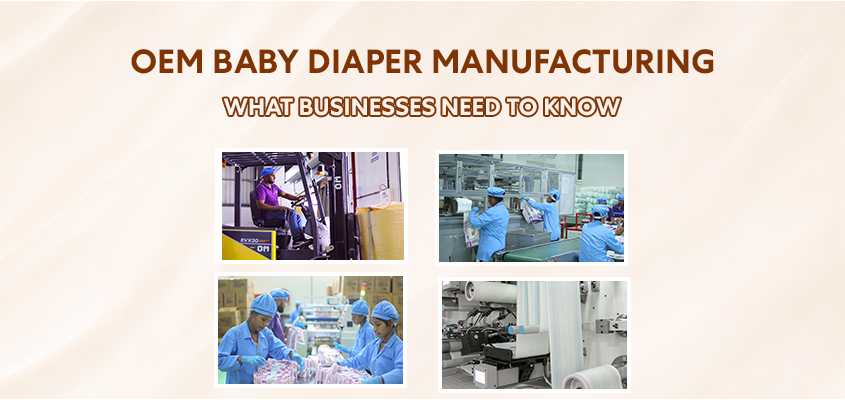
28, Nov 2026
OEM Baby Diaper Manufacturing: What Businesses Need to Know
How OEM Manufacturing Helps Businesses Build Their Own Baby Diaper Brand
Plenty of families are moving to disposable diapers, and plenty of small businesses have noticed. Baby hygiene is a category where parents buy again and again for two or three years, and online shopping has made it easier for a new name to reach them. The catch is the factory. Diaper machines are expensive, they need trained people to run them, and nobody sets one up on a whim. That's where OEM baby diaper manufacturing comes in. Your side is the brand name and the idea behind it. An established manufacturer makes the diapers to your requirements, with your name on the pack. A good OEM partner helps with product development, production, quality checks and packaging, so your time goes into sales instead of machinery. It isn't as simple as sending over a logo and waiting, though. The better you understand the process, the fewer surprises you'll get. A little groundwork now saves a lot of trouble later.What Is OEM Baby Diaper Manufacturing?
OEM stands for Original Equipment Manufacturer. In the diaper business, it means a factory that makes diapers to a brand's own brief instead of selling only its own products. You decide what the diaper should be. They build it. Compare that with owning a plant. If you run your own facility, you buy the machines, hire and train the staff, source every raw material and keep the lines busy. If you outsource, the manufacturer already has all of that in place, and you pay for what you order. The finished diapers are sold under your brand name. Your customers never need to know whose machines were involved. The manufacturer's job is production and packaging. Yours is the brand, the market and the sales.How Does the OEM Baby Diaper Manufacturing Process Work?
The details change from one factory to another, but most projects follow the same six steps.- Requirement discussion. You explain who you're selling to, what type of diaper you want, and roughly what volumes and budget you have in mind. The manufacturer tells you what's realistic.
- Product specification. Materials, absorbency, sizes and features get fixed on paper. Samples and finished batches get checked against this later, so get it right.
- Sample development. You receive samples, test them, and ask for changes. Expect more than one round.
- Manufacturing. Once the samples are approved, production starts to those approved requirements.
- Quality checks. Performance, materials, and batch consistency are inspected before anything leaves the factory.
- Packaging and dispatch. Your branding goes on the packs, the cartons are filled, and the order ships.
Customisation Options Available in OEM Baby Diaper Manufacturing
One of the biggest reasons to go the OEM route is that the product can be shaped around your customer. What you can change depends on the manufacturer, but the usual list looks like this:- Diaper type. Baby diaper pants are the most requested, and other formats may be available.
- Absorbency level. Lighter for daytime, heavier for overnight, depending on who will use it.
- Top sheet and back sheet. The materials decide how soft the diaper feels and how well it breathes.
- Leak protection. Leak guards and leg cuff design.
- Waistband. How stretchy it is and how it fits.
- Sizes. Different sizes matched to baby weight groups.
- Packaging. Pack sizes, product information and branding.
Understanding Raw Materials Used in Baby Diaper Manufacturing
It helps to know what's inside a diaper, even if you never touch the machines. Whoever quotes you will talk in these terms, and you'll want to follow along.- Top sheet. The soft layer against the baby's skin.
- Absorbent core. Takes in liquid and holds it.
- Super absorbent polymer (SAP). The granules in the core that lock moisture away.
- Fluff pulp. Gives the core its structure and helps it absorb.
- Back sheet. The outer layer that stops leaks.
- Elastic materials. Used around the waist and the legs.
- Adhesives and small parts. They hold the layers together.
Quality Control in OEM Baby Diaper Production
Don't leave quality checks for the end of the line, because by then it's too late to fix anything. A decent factory checks at several points, starting with the raw materials the day they arrive. After that the tests look at how the diaper behaves. How fast does it take in liquid, and how well does it hold it? How much comes back to the surface when you press on it? That's called rewet. Does it leak at the legs or the waist? The elastics get checked for stretch and fit, and someone measures the dimensions and looks at how the diaper is put together. Since it sits on a baby's skin, there's hygiene and microbiological testing as well. The last step is checking that batches match each other, plus a final look at the finished product. Ask how often each check is done and whether the records are kept. One good batch proves very little. Ten identical ones tell you the factory has its process under control.Packaging and Private Label Branding for Baby Diapers
This is where an OEM order starts to feel like your own product. The pack carries your brand name and logo, your colours and your design. Parents will judge you by it before they've even touched the diaper. Make sure the pack shows the size, the quantity and the two or three features you want to be known for. Think about where it will be sold, too. A pack for a retail shelf and a carton for distributors have different needs. And check the label information carefully, because requirements differ between markets and reprinting is costly.What Businesses Should Consider Before Starting OEM Production
Before you place an order, settle these questions:- who your target audience is, and whether there's real demand
- how you'll position and price the product
- the specifications you need
- the order quantities you expect, and the minimum order quantity (MOQ) the manufacturer asks for
- production capacity and delivery timelines
- packaging and branding requirements
- how you'll handle distribution and inventory
Benefits of Partnering with an OEM Baby Diaper Manufacturer
The main benefit is the obvious one. You don't have to build a factory. You use infrastructure that already exists, so you can launch sooner and with far less upfront investment. Beyond that, you can have the product developed around your needs, rather than picking from a fixed list. You can put your own brand on it through private label. You can scale up production as your sales grow. And because someone else is handling manufacturing, your own energy goes into marketing, sales and distribution, which is where a new brand usually needs it most.Why Choose Litewave Healthcare for OEM Baby Diaper Manufacturing?
Litewave Healthcare is a baby and adult diaper manufacturer based in Kosamba, Surat, and among the diaper making companies in India that work with businesses on OEM and private-label projects. Here's what its website says about what it offers:- dedicated baby diaper manufacturing
- product specifications customised to the brand's requirements
- manufacturing infrastructure for commercial and bulk orders
- in-house quality testing
- private-label packaging and branding support
Conclusion
OEM manufacturing gives a business a realistic way to launch its own baby diaper brand without building a factory. What makes it work is the groundwork: clear product specifications, well-chosen materials, proper quality testing and packaging that suits your market. Just as important is a partner who can support your production over the long term, not just the first order. If you're looking at baby diapers manufacturers in India for an OEM project, get in touch with Litewave Healthcare and talk through your requirements. Tell them what you want to make, ask for samples, and see whether it's the right fit.Frequently Asked Questions
What is OEM baby diaper manufacturing? It's an arrangement where a manufacturer produces baby diapers to a brand's requirements, and the brand sells them under its own name. The brand doesn't need its own factory. How does the OEM baby diaper manufacturing process work? It usually runs through requirement discussion, product specification, sample development, manufacturing, quality checks, and then packaging and dispatch. Can businesses customise baby diapers through OEM manufacturing? Yes, within what the manufacturer offers. Diaper type, absorbency, materials, leak protection, waistband, sizes and packaging can often be adjusted. What materials are used in OEM baby diaper production? A soft top sheet, an absorbent core made from fluff pulp and super absorbent polymer, a back sheet, elastic materials for the waist and legs, and adhesives that hold it together. What is the minimum order quantity for OEM baby diaper manufacturing? It differs from one manufacturer to another and depends on the product and the order. Always ask for the MOQ before you commit to a design. Litewave says its minimum depends on the requirement, with trial runs possible. How long does the baby diaper manufacturing process take? There's no single answer. Sample approval, production and dispatch each take time, and it depends on your specification and order size. Ask the manufacturer for a timeline in writing before you begin.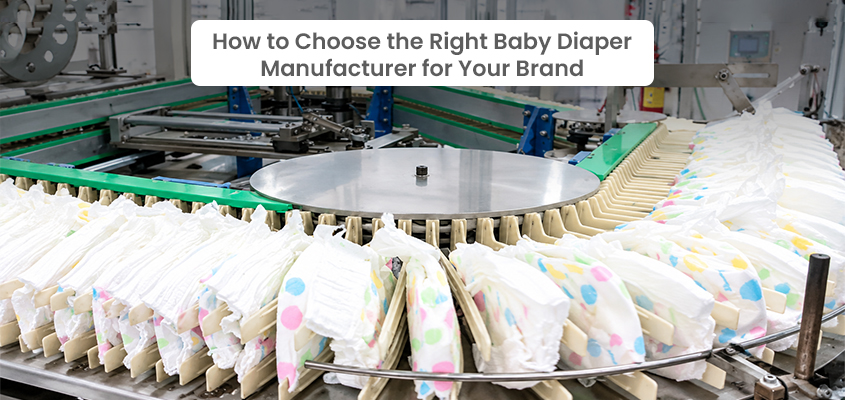
26, Oct 2026
How to Choose the Right Baby Diaper Manufacturer for Your Brand
What to Look for in a Baby Diaper Manufacturer: Key Factors to Consider
Diapers are an odd product. Nobody talks about them when they work. Parents only notice when something goes wrong, and then they notice loudly: a leak at 2 a.m., red marks around the thighs, a pack that feels cheaper than the last one. And it's the brand name on the pack that takes the blame, not the factory. So picking a baby diaper manufacturer is really a decision about your reputation. Get it right and product quality, repeat buyers and word of mouth mostly look after themselves. Get it wrong and no amount of clever packaging will rescue you. Below is what to weigh up before you commit: your own requirements, the factory's quality standards, its capacity, OEM and private label support, certifications, pricing and delivery, and how easy the team is to work with.1. Understand Your Brand's Baby Diaper Requirements
A common slip in first-time briefs is writing "a premium baby diaper" and stopping there. Premium compared to what? A factory can't build "premium". It can build a particular core, a particular top sheet and a particular price, so those are the things to pin down. Start with your buyer. A first-time mother in a big city who'll happily pay extra for softness wants a different product from a family in a smaller town buying the large pack because the per-piece cost is lower. Try to launch for both and you'll usually do neither well. Range is the next call. Pants, tapes, or a mix? Honestly, three sizes can be enough to get going, four if you want newborns covered. Don't fill the whole size chart on day one just because a competitor has. A few months of sales will show you which sizes fly off the shelf and which sit in the godown, and you can add the rest then. Now the part most people skip: put the diaper on paper in plain words. "Soft" means nothing to a factory, because nobody can test it. "But a line like 'no wet bedding by morning' is something they can check on a trial run”. Do the same for absorbency and for the fit around the thighs. Then add two more lines: what you want to sell it for and roughly how many pieces you'll move in a month. A guess is fine. A blank isn't, because the quote you get back will be just as blank.2. Check the Manufacturer's Product Quality Standards
Find out what's actually inside: what touches the baby's skin, what soaks up the liquid, what stops it leaking out, and what keeps it snug. Ask for the specification on paper. Then ask how they check absorbency, leak protection, and fit, and how often. If the person you're speaking to has to go and find a colleague to answer, that's fine, as long as someone does. Samples matter more than anything else here, and they cost very little compared with a bad bulk order. Ask for more than one set if you can, ideally made on different days, so you can see how consistent the product is. Pour water on one. Wait a minute, then lay a dry paper napkin on the wet spot to see whether anything comes back up. Tug the waistband and bend the tapes or pant sides. Then give a few to parents and ask for blunt feedback after a full day of wear.3. Evaluate Manufacturing Capacity and Production Consistency
Many factories handle a first order beautifully, then struggle. So think about where you want to be in a year, not only where you're starting. Ask for a realistic timeline: how many days a normal production run needs, and what happens between packing and delivery. What do they do to keep batch twelve the same as batch one? Shoppers pick up on a change in feel faster than you'd expect, and they rarely write in about it. They just buy something else. And ask about the busy months. When the festive season arrives, or a large buyer lands, does your delivery date quietly slide back?4. Look for OEM and Private Label Manufacturing Services
Most new brands don't want to run a factory. They want to run a brand. That's what OEM manufacturing is for: you describe what you need, and the manufacturer develops and produces the diapers to your business requirements. Private label goes a little further, with your own packaging and labelling on the finished pack. What matters is how flexible the setup is. Can the packaging be customised? Can the product specification be adjusted, or are you choosing from a fixed range? Get answers on the minimum order quantity, the artwork requirements and the lead time before you start designing anything. Those three have a habit of derailing launch dates.5. Verify Certifications, Documentation, and Quality Control
Anyone can say they're certified. Ask to see the paperwork, and check that the name on the certificate is the company that will actually make your diapers. Quality assurance should leave a trail: written specifications, batch records, someone responsible for sign-off. If a parent complains six months from now, that trail is how you find the batch. It's also worth checking early what your target market expects on the pack. Labelling and regulatory requirements differ from one market to another, and finding that out after printing is painful.6. Compare Pricing, Minimum Order Quantities, and Delivery Timelines
Two quotes can look quite different and still describe different diapers. Before you compare, line the specifications up point by point. A thinner core or a lighter back sheet is the usual reason one quote comes in lower. After that, look at the rest of the bill: the MOQ, payment terms, packaging, transport, anything extra. Then delivery. A great rate isn't great if the goods arrive three weeks late and you miss your season.7. Assess Communication and Long-Term Business Support
Check how the team talks to you before you pay anything. Do they reply fast? Do they answer what you asked, or just send a brochure? If they're slow now, they won't get quicker later. Ask what happens when a batch has a problem, and who you should call. Get a name and a number. Talk about reorders early too. Ask if they can make more when your sales go up. A good manufacturer will be happy to plan that with you.Common Mistakes to Avoid When Selecting a Manufacturer
- Picking the cheapest quote and finding out later what was left out of the product.
- Skipping the samples, which is the cheapest way to catch a problem.
- Overlooking MOQs and delivery terms until cash is tight.
- Never asking how quality control really works day to day.
- Choosing a factory that suits order one but can't support order ten.
Conclusion: Choose a Manufacturing Partner That Supports Your Brand
When you strip it back, a good manufacturing partner gives you steady quality, enough capacity, flexibility on customisation, pricing you can follow, and clear communication. None of that shows up in a first quote. It shows up when you test the samples, read the paperwork, and compare offers on equal terms. Take the time to do that before you finalise anything. If you're looking at baby diaper OEM and private label manufacturing, Litewave Healthcare is worth a conversation. Its OEM services support customised products under a client's brand name, and it's one of the baby diapers manufacturers in india you can add to your shortlist. Send over your requirements, ask for samples, and see how it fits your brand.
Get In Touch